Reading the code of life
A command to read. A word about creation.Were the first words of the Quran about DNA?
The opening revelation brings reading, creation, and learning together. Could the word ‘alaq offer a connection to the information inside living cells?
Watch at your own pace
One word. A different way to look at life.
You can explore the page here. Playback requires an approved website domain.
The idea in 30 seconds
Three things to know about DNA and ‘alaq:
A word that invites a closer look.
Often translated with the idea of clinging, ‘alaq is the starting point for the episode’s proposed connection.
Life carries information.
DNA stores instructions that cells use to grow and function. Its paired strands can separate so that information can be copied.
Reading is the central thread.
The passage brings creation into a setting of reading and learning. The episode asks whether that theme can also illuminate biology.
First, a little science
How does a cell use its instructions?
Think of a recipe stored in a book, a working copy, and something made from it. Here is one important route from genetic information to a working molecule.
1. Store the information
A sequence of four chemical bases—A, T, C, and G—holds genetic information.
2. Make a working copy
A cell copies a gene’s information into messenger RNA. This step is called transcription.
3. Build from the message
A ribosome reads the RNA in groups of three bases and assembles a protein. This is translation.
A simplified view of protein production; some genes make functional RNA instead. Explore how genes make proteins and the basics of DNA.
Does a cell really “read”?
It does not understand words as we do. Molecular machinery responds to a sequence of chemical bases. “Reading” is a useful way to describe that process—and the parallel the episode invites us to consider.
The words behind the question
Reading. Creation. Learning.
اقْرَأْ بِاسْمِ رَبِّكَ الَّذِي خَلَقَ
خَلَقَ الْإِنسَانَ مِنْ عَلَقٍ
اقْرَأْ وَرَبُّكَ الْأَكْرَمُ
الَّذِي عَلَّمَ بِالْقَلَمِ
عَلَّمَ الْإِنسَانَ مَا لَمْ يَعْلَمْ
These verses call the reader to read in the Creator’s name, describe human creation from ‘alaq, and speak of teaching through the pen and learning what was unknown.
The episode focuses on this setting: a word about what humans come from, surrounded by the language of knowledge.
This is a summary of the passage. The DNA connection is the episode’s proposed interpretation.
What does ‘alaq mean here?
The Clear Quran renders the phrase in 96:2 as “created humans from a clinging clot.” The episode draws attention to the idea of attachment and asks whether it could suggest another layer of meaning.
Starting from the belief that the Quran is divine revelation, the episode explores whether the parallels in structure, creation, and information offer a possible interpretation of ‘alaq as DNA.
Read. Reflect. Explore.
Where might the connections be?
The episode brings together three parallels. Open the questions that interest you.
01Could “clinging” bring DNA to mind?Attachment, paired strands, and copying information
DNA’s two strands form a double helix. Their bases pair across the middle: A with T, and C with G. The strands can separate as the cell copies DNA or makes RNA.
The episode proposes that since ‘alaq involves non-permanent binding or intertwining, a parallel exists between ‘alaq and the way DNA strands bind, separate, and are intertwined.
02How does DNA help build a human?Inherited information and the beginnings of development
Development begins with a cell that carries inherited genetic information. As cells divide and specialize, they use different parts of that information to make the molecules they need.
The episode connects DNA’s role in development with the passage’s description of human creation from ‘alaq. It asks whether the word could evoke the information that helps guide the process.
03Why place creation between calls to read?Information, the pen, and learning what was unknown
It is thought-provoking that the first five verses of Surah 96 use so many words related to reading, writing, and knowledge—and place the word ‘alaq squarely among them.
In biology, a sequence carries information that cells copy and use. In the passage, reading and the pen point toward learning and the sharing of knowledge. The proposed parallel is about information becoming meaningful through use.
For the curious reader
A little further, if you like.
Read a short episode summary
The episode asks whether ‘alaq, in the Quran’s opening revelation, could be understood through the lens of DNA. It brings together three ideas: strands that bind and separate, genetic information’s role in human development, and the reading of a biological code.
Its central proposal is that the passage’s themes of reading, creation, and learning invite a fresh reflection on life’s information. This is an edited summary of the existing episode page, not a word-for-word transcript.
Sources & illustration notes
- The episode: Were the first words of the Quran about DNA? The proposed connections summarize the episode’s argument as presented on the original page.
- The passage: Quran 96:1–5. The brief quotation of 96:2 uses Dr. Mustafa Khattab’s The Clear Quran. Other English descriptions are summaries.
- The science: NHGRI: DNA fact sheet and MedlinePlus Genetics: how genes direct protein production.
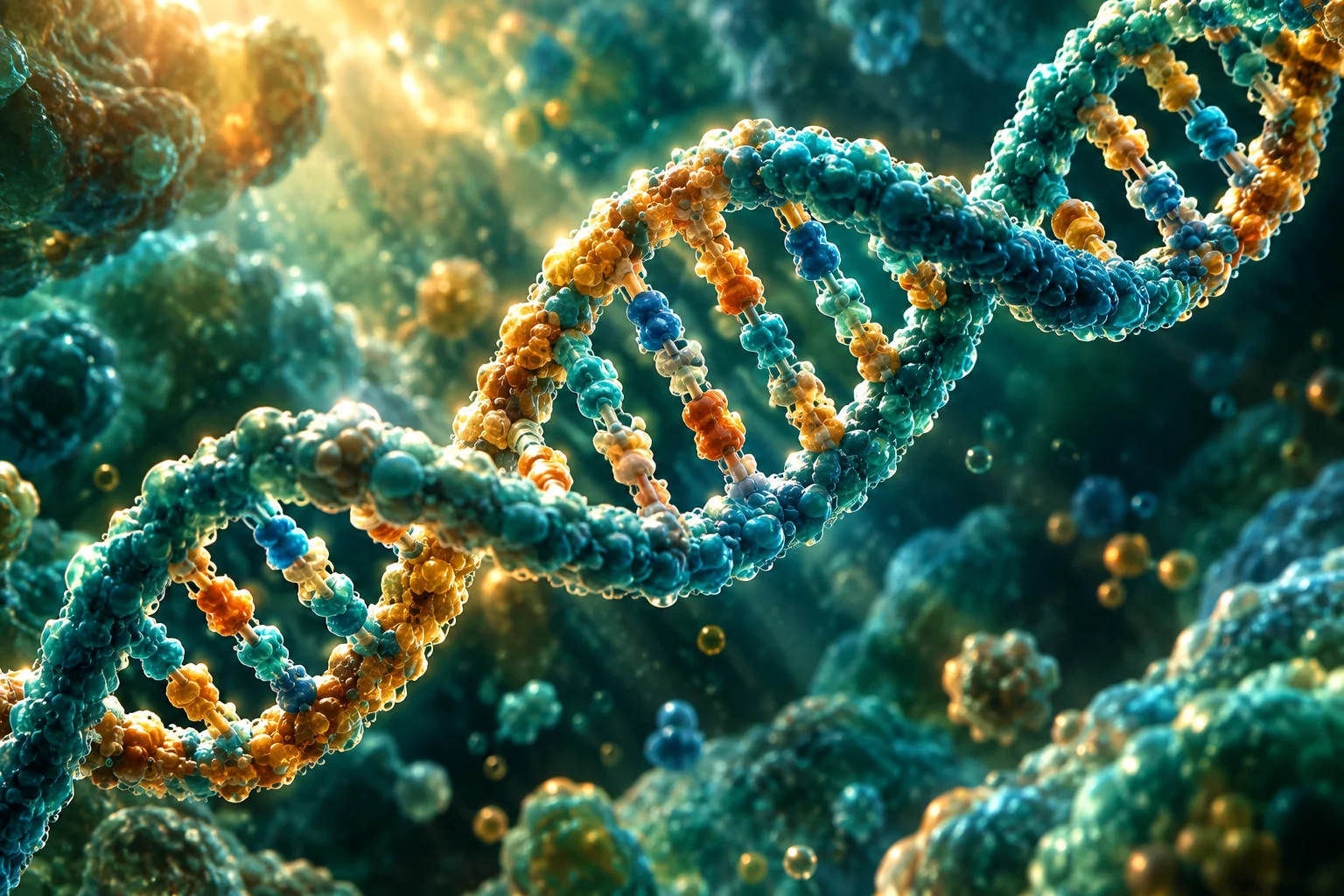
- Illustration: AI-generated conceptual molecular artwork. Colors and molecular details are illustrative, not a molecular model or microscope photograph. Related-episode images come from the site’s existing artwork.
Follow the question