Episode 083 · Mass Extinction Series
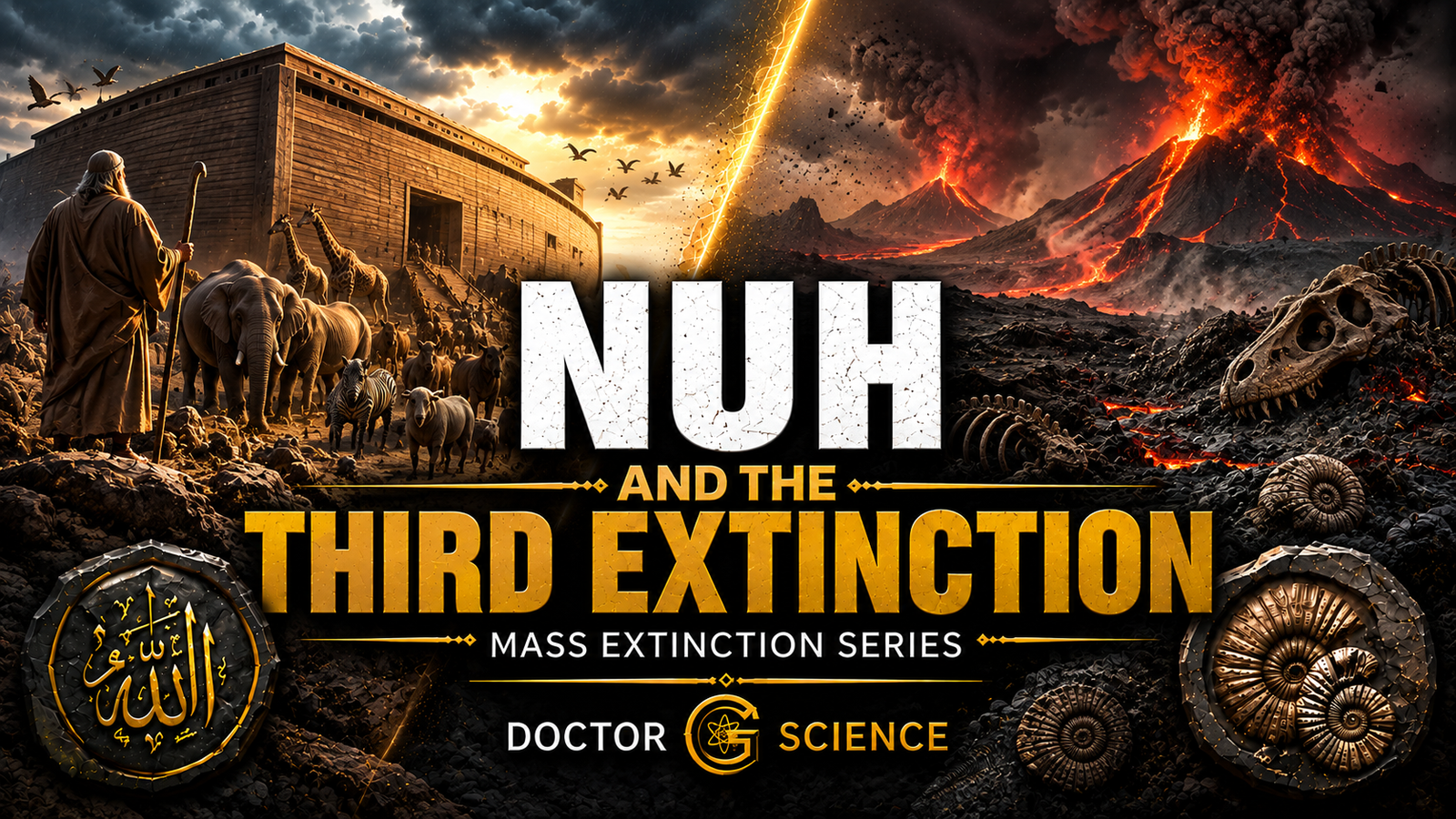
Nuh and the Third Extinction
A Quranic and scientific reflection on flooding, fire, atmospheric collapse, and the survival of life during the End-Permian extinction.
The science: the End-Permian crisis
Around 252 million years ago, Earth experienced its largest known mass extinction. Enormous eruptions associated with the Siberian Traps released lava and gases over a prolonged interval. Carbon dioxide, methane and sulfur compounds contributed to rapid warming, acid rain, ocean acidification and oxygen loss. The crisis propagated through land, air and sea rather than remaining a single localized event.
Life did not disappear completely. Populations survived in refugia—places where conditions remained tolerable—and those survivors became part of the biological recovery that followed.
Quranic passages discussed
حَتَّىٰٓ إِذَا جَآءَ أَمْرُنَا وَفَارَ ٱلتَّنُّورُ
Ḥattā idhā jā'a amrunā wa-fāra at-tannūru
“Until when Our command came, and the oven boiled over…” (Quran 11:40, as translated in the episode)
مِّمَّا خَطِيٓـَٔـٰتِهِمْ أُغْرِقُوا۟ فَأُدْخِلُوا۟ نَارًۭا
Mimmā khaṭīʾātihim ughriqū fa-udkhilū nāran
“Because of their sins, they were drowned and put into the Fire.” (Quran 71:25, as translated in the episode)
قُلْنَا ٱحْمِلْ فِيهَا مِن كُلٍّۢ زَوْجَيْنِ ٱثْنَيْنِ
Qulnā iḥmil fīhā min kullin zawjayni ithnayn
“…We said, ‘Take into it a pair from every species…’” (Quran 11:40, as presented in the episode)
Transcript summary
The episode begins by questioning the familiar idea that the destruction of Nuh’s people began simply with rain. It turns first to Quran 11:40, where the catastrophe begins when “the oven boiled over,” and compares that image of hot material gushing from the ground with the volcanic beginning of the End-Permian crisis.
It then follows the catastrophe across Earth systems. Siberian Traps gases altered the atmosphere, acid rain fell, temperatures rose, and the oceans became increasingly hostile. The episode compares this convergence of land, sky and water with the Quranic flood account, in which waters from Earth and sky meet.
Quran 71:25 places drowning and entry into fire together. The episode acknowledges the established spiritual readings of this verse while drawing a physical analogy with an extinction interval marked simultaneously by flooding, scorching heat and toxic environmental conditions.
Finally, the ark’s pairs are compared with ecological refugia and surviving populations. The proposal is not that the account and the geological event have been historically identified as one event, but that the Quranic sequence offers a striking framework for reflecting on a planetary catastrophe: destruction rises from the ground, the sky amplifies it, Earth’s systems converge, and a fraction of life survives.
Continue the series
Madyan and the Second Extinction · ‘Ad and Thamud: The Fifth Extinction · Quran on Dinosaurs