The sea retreated
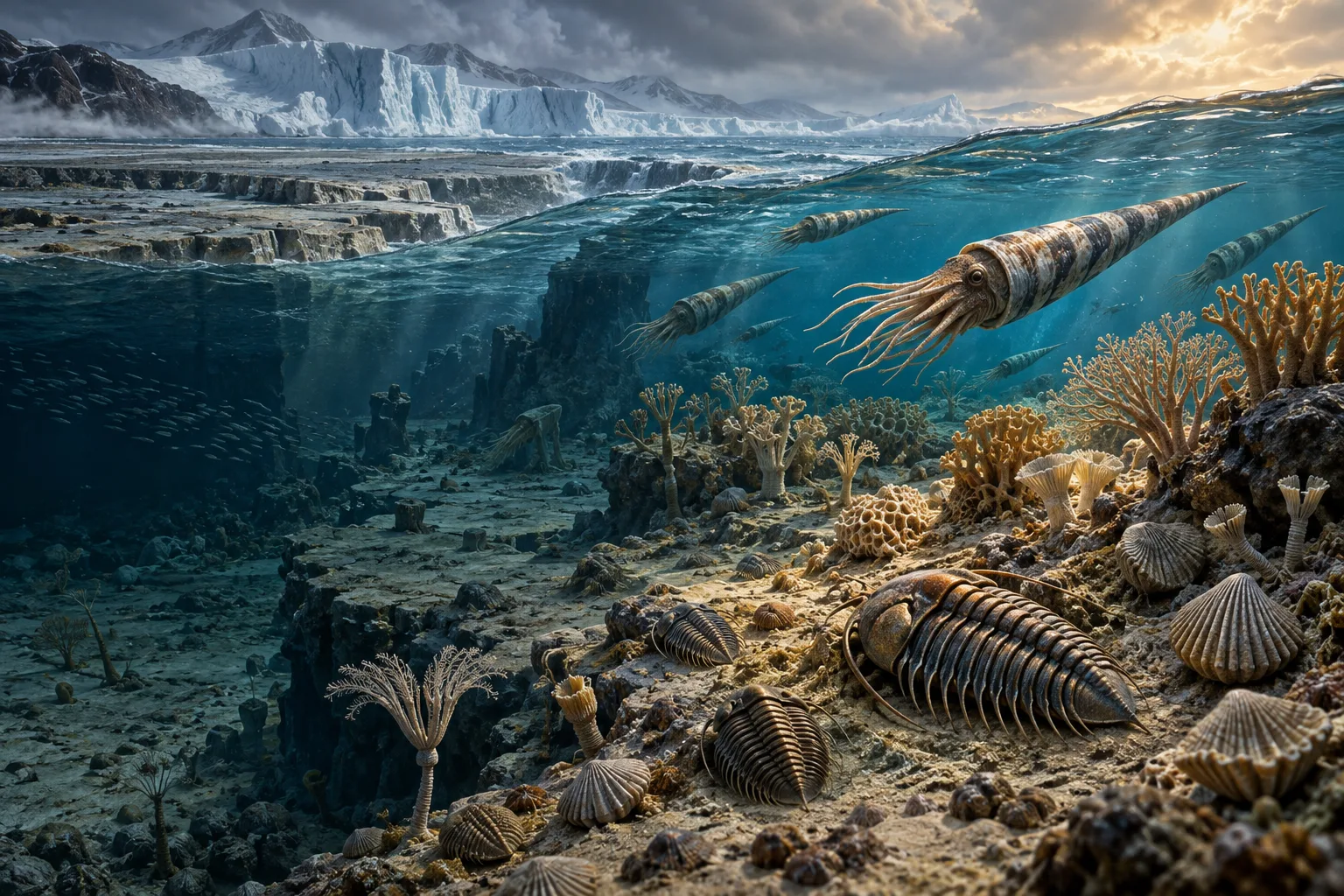
Growing Gondwanan ice sheets locked up ocean water and removed vast shallow-sea habitats.
Episode 085 · Mass Extinction Series
Earth’s first great mass extinction struck in two pulses: shallow seas retreated as ice sheets grew, then returning waters carried a second ecological shock. The episode places that pattern beside Pharaoh’s pursuit through a sea that opened—and then came back.
Watch
End-Ordovician · about 444 million years ago
The video plays on the published Doctor G Science site.
Growing Gondwanan ice sheets locked up ocean water and removed vast shallow-sea habitats.
Melting ice raised sea level again, while oxygen-poor waters expanded through vulnerable ecosystems.
Pharaoh treated an extraordinary opening as permission to pursue, not a reason to stop.
The science
Most complex life still lived in the oceans.
Ice sheets grow across Gondwana as the planet enters a major glacial interval.
Warm continental seas retreat, erasing habitats that supported exceptional marine diversity.
Glaciers melt and sea level rises, but the rebound does not simply restore the earlier world.
Changing circulation and expanding oxygen-poor water strike organisms already weakened by the first disruption.
The episode’s elastic-band image is useful: first the ocean system was pulled far from its earlier state; then the snap back produced a different kind of stress. Brachiopods, trilobites, bryozoans, graptolites and other marine groups were devastated across the two pulses.
Science and reflection
As water became trapped in continental ice, sea level fell sharply. The warm, shallow seas covering parts of the continents were among the most biologically productive environments on Earth. Their disappearance compressed or eliminated entire ecosystems before the second pulse began.
Warming and deglaciation changed circulation and ocean chemistry. Oxygen-poor water expanded through parts of the oceans, confronting surviving species with a rapid second transformation. The same returning water that recreated marine space could also carry conditions many organisms could not tolerate.
Quran 20:77 describes Moses being told to strike a dry path through the sea. Pharaoh follows with his forces, and Quran 20:78 says they are overwhelmed by the sea. Quran 10:90 describes the moment drowning overtakes him. The episode focuses on the sequence: water moves away, a path appears, pursuit continues, and the sea returns.
The geological event occurred hundreds of millions of years before human history. The comparison is an interpretive reflection on a shared physical pattern and two different kinds of vulnerability. Ordovician organisms had no choice in a planetary disruption; Pharaoh had agency, yet pride made him read a warning as an opportunity.
The episode’s conclusion
The End-Ordovician extinction shows how fragile life becomes when ocean systems move rapidly between extremes. Pharaoh’s story adds a moral dimension: power can produce a cognitive blindness in which even a terrifying suspension of the ordinary is interpreted as a road to conquest. In deep time, the returning sea was geology moving into a new state. In the Quranic account, it exposed the limits of power without humility.
Mass Extinction Series